
Freight notes
Shipping from China to Mexico by sea, air and express
Cargo that starts in China and has to be delivered in Mexico can leave by ocean, by air, or with a courier. The workable choice depends on the Chinese gateway a truck can reach and on the Mexican port or airport that can take the goods in.
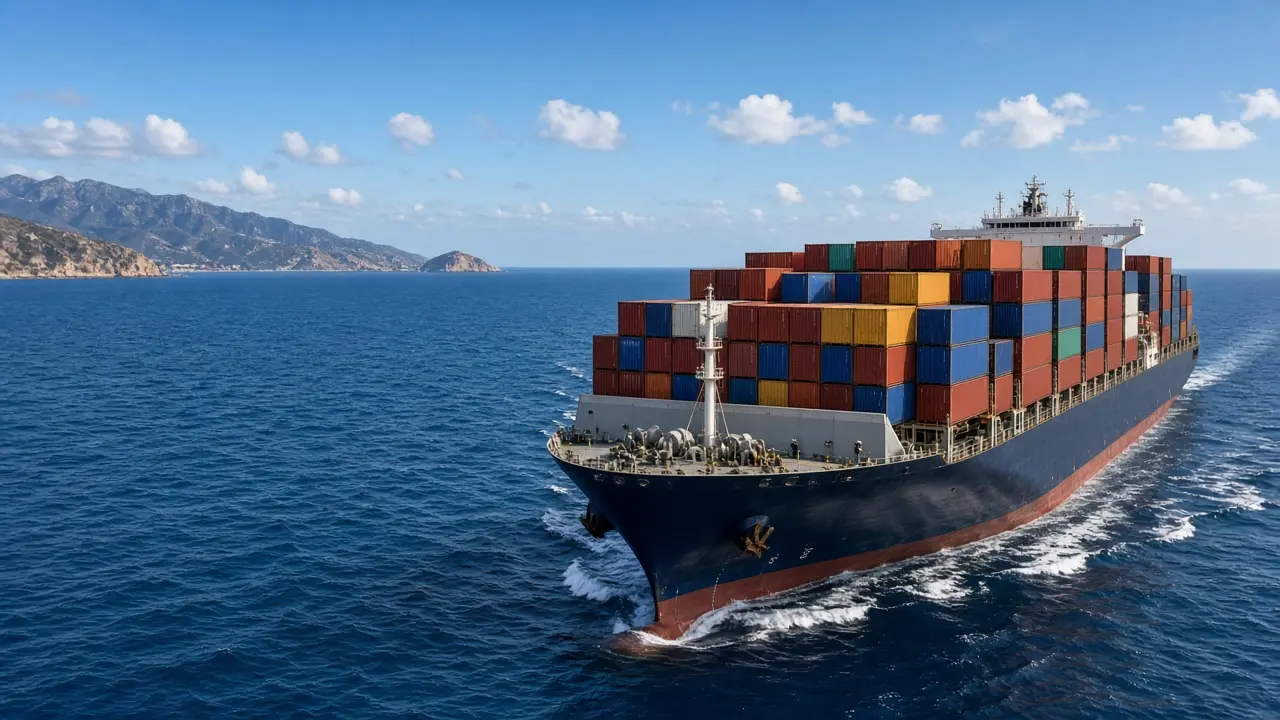
Ways to move the cargo
For shipping from China to Mexico, ocean freight is the usual way to move commercial cargo that can wait. A full container is a 20-foot, 40-foot, or 40-foot high-cube box sealed for one shipper. The China shipping container page describes that box, and two limits that stay in force here: this site does not sell a container as a building, and it does not look up a box number. Less-than-container load shares the box with other compatible cargo. Sharing adds handling at origin and again before delivery. That is the trade for not paying for space you do not fill. The booking can be port to port, or it can include a truck where a truck can actually be arranged.
Air freight is for cargo that cannot wait for a vessel. A sample, a first production lot, or a replacement part is the usual reason. The chargeable weight is the greater of the gross weight and the volume weight, so the measurements belong in the first note, next to the kilos. Batteries, liquids, magnets, and powders can limit the flights that will accept the goods. Name them before anyone looks for space. Air freight China to Mexico still ends at an airport that can clear the cargo. It does not end at a street address unless a delivery was arranged on purpose.
Courier and express suit cartons and documents that fit a courier’s size and weight limits. Pickup is possible in many Chinese cities, still subject to those limits. Duties, taxes, and a remote-area fee can be charged when the carton is delivered. If an incoterm is already agreed, it says who pays. Express is not a quiet substitute for a container of commercial goods. A courier’s own tracking page is also not a page on this website.
Rail needs a plain limit. China–Europe rail loads at an inland hub such as Chongqing, Xi’an, Chengdu, Zhengzhou, or Yiwu, and it hands over at a place such as Duisburg, Hamburg, or Małaszewicze. That corridor does not continue as a direct train into Mexico. Mexico is reached mainly by ocean or by air, and then by truck or courier on the Mexican side when that last leg can be arranged. The freight services page lists rail as a China–Europe mode, beside ocean, air, and express. A search that mixes the train with this destination is not, by itself, a product this site is offering.
Trade lanes for shipping from China to Mexico
A lane, on this page, is a mode, a Chinese gateway, and a Mexican place that can receive the cargo. It is not a sailing schedule. This site does not publish vessel names, departure days, or a map of weekly strings. The China shipping routes page says the same thing in general: the route is chosen from the cargo and the places you write down. A quote is what names one sailing, one flight, or one handover. The quote is a proposal. It is not a booking.
On the China side, the gateways shippers use most often for export are coastal. Shanghai sits at the mouth of the Yangtze and is a common load port for cargo from eastern China. Ningbo, including the Beilun area people often mean by that name, serves the same delta. Shenzhen’s Yantian harbor, on the north bank of Dapeng Bay, is the eastern Shenzhen gateway many ocean bookings use. Shekou is the other Shenzhen harbor, on Shenzhen Bay. Qingdao serves cargo from Shandong and the provinces around it. Guangzhou’s Nansha, Xiamen, and Tianjin come up when the factory is closer to them than to the ports above. None of those sentences is a list of sailings. They only say where a box can be handed to a ship. Which name is useful depends on where a truck can collect.
On the Mexico side, four seaports are the ones shippers usually name for containerized imports. Manzanillo, in Colima, and Lázaro Cárdenas, in Michoacán, face the Pacific. They are the ports people mention when the ship crosses from Asia. Veracruz and Altamira face the Gulf of Mexico. They matter when the routing uses the Gulf, or when the warehouse is closer to the east coast than to the Pacific. This page does not rank the four and does not quote throughput. A forwarder names one of them only when a carrier has space there for that cargo. The China shipping ports page is the Chinese end of the same idea: where the harbor sits, not a congestion map and not a timetable.
Air gateways are cities, not berths. Mexico City, Guadalajara, and Monterrey are the airports shippers commonly name for air freight and for courier into the country. Mexico City’s commercial flights are not all at one field. Cargo clears at the airport the airline actually uses, and that choice belongs in the quote. Guadalajara and Monterrey are inland cities with their own airports, often closer to factories in the Bajío and the north. Naming the city is not a flight number. Space, the commodity, and the airline’s acceptance rules still decide whether that airport is open to the cargo on the day you need.
China to Mexico freight can also be a mix. Ocean to a Pacific port, then a truck to a warehouse inland, is one pattern. Air to Monterrey, then a local delivery, is another. The pattern is a proposal. It is not a promise that every postal code is served every week. If the consignee is in a city this page does not name, write the city anyway. The destination is the one on your file, not the one that was easiest to list.
What to send before anyone prices the file
A quote is a proposal for one shipment. It is not a rate card, and it is not a transit-time table. The facts that make a proposal possible are ordinary. Leaving one out usually means a second round of questions, and a second round is slower than a complete first note.
Name the commodity in plain language, and send the HS code if you already know it. The forwarder will not invent a description to make a form look finished. If the packing list and the cartons disagree, the shipment waits. You still confirm the code before an entry is filed. A guessed code is not a service.
Send dimensions and weight for each piece, or the container size if the cargo already fills a box. For air, both the kilos and the measurements matter, because chargeable weight uses the greater figure. A photo of the packed cargo helps when a piece is awkward. Out-of-gauge cargo, and cargo with batteries, liquid, or magnetic material, has to be named at the start. Many ships and flights will not take those pieces, and the refusal is cheaper before the truck is booked.
State the incoterm if one is already agreed. EXW, FOB, CIF, DAP, and DDP put the truck, the main carriage, and the duties in different hands. If no term is agreed yet, say so. Every quote should state which term it assumes. It should not silently treat duties as included.
State the origin and the destination as places a truck or a courier can use: the city or port in China where the cargo can be collected, and the city, port, or airport in Mexico where it must be delivered. A factory name without a city is not enough. A ready date is the day the cargo can be picked up. A must-arrive date is a different fact. Send both when you have both. The quote form is where those facts go. Sending the form does not book the shipment. That note is what shipping from China to Mexico needs before a price can be discussed.
Documents, export, and import
Export from China rests on documents that match the boxes. The commercial invoice, the packing list, and the draft bill of lading or air waybill are checked against each other before an export declaration is filed. The shipper still owns the description of the goods and their value. A forwarder coordinates the file. The forwarder does not replace a fact only the shipper knows.
The carrier that lifts the cargo is the line or the airline named in the quote. The China shipping lines page explains the ocean half of that role: the line operates the ship and issues the ocean bill. Arranging the booking does not turn the forwarder into the ocean carrier. If the plan changes, you should hear while you can still act. Nothing on this page is a vessel schedule, and nothing here is a live position of a ship.
Import into Mexico is a separate filing. The importer, or the broker the importer appoints, submits the customs entry. The Mexican import declaration is the pedimento. Duty and tax depend on the classification, the value, and the rules in force on the day of entry. This site does not publish a duty rate, a tax figure, or a list of permits. If the goods need a license, that license stays with the importer. A quote that assumes DAP or DDP should say so in writing. It is still not a promise of the amount an authority will assess.
People ask for a day count here. Shipping from China to Mexico does not have one number this site will print. Ocean freight is the mode for cargo that can wait through a voyage, air freight is the mode for cargo counted in a shorter calendar, and a courier has its own service window. The cutoff at the Chinese gateway and the release at the Mexican port or airport move with the particular sailing or flight. A quote can name the service that was available when the quote was written. It does not freeze that plan. It becomes a booking only when both sides confirm it in writing.
After release, the last mile is a truck or a courier to the consignee. That leg is part of the quote only when it can be arranged. A port-to-port offer does not include it. Storage, inspections, and time past free days are local charges. They show up when they happen. They are not a fee this page can state in advance. If you already have a container number, a bill of lading number, or an air waybill, the place to read it is the carrier or courier that issued it. The tracking-number note says where that number is opened. This website does not track it.
Questions about this lane
Can commercial cargo move by ocean on this lane?
Yes, when the cargo can wait for a vessel and a carrier has space. A full container is sealed for one shipper. A shared box is for cargo that does not fill one. This page does not list sailings, and a quote is still required before anyone books.
What if the cargo does not fill a container?
Less-than-container load shares the box with other compatible cargo. You avoid paying for unused space, and you accept extra handling at origin and again before delivery. Small cartons that fit a courier’s limits are often simpler by express. The choice is part of the quote, not a rule printed here.
Does a China–Europe train continue into Mexico?
No. China–Europe rail hands over in Europe. It is not a direct corridor to Mexico. Cargo for Mexico moves mainly by ocean or by air, with a truck or courier after arrival when that leg can be arranged.
Which Mexican ports and airports are usually named?
For ocean, shippers usually name Manzanillo and Lázaro Cárdenas on the Pacific, and Veracruz and Altamira on the Gulf. For air and courier, they usually name Mexico City, Guadalajara, or Monterrey. Naming a place does not mean a ship or a flight is open this week. The quote is where a carrier is actually named.
Why is there no transit time on this page?
A single number would be false. The cutoff in China and the release in Mexico depend on the sailing, the flight, or the courier service that was available when the quote was written. This site does not publish a fixed transit time for any lane.
Why is there no price on this page?
There is no public rate card. Cost depends on the places, the weight and volume, the commodity, the incoterm, and the carrier that has space. A quote is a proposal for one shipment. It is not a guaranteed rate.
What has to be ready before a quote is useful?
The commodity, the HS code if you know it, the dimensions and weight, the incoterm if one is agreed, the collection point in China, the delivery point in Mexico, and the ready date. Batteries, liquids, magnets, and out-of-gauge pieces have to be named in that first note.
Can this website track the container or the waybill?
No. A container number, a bill of lading number, or an air waybill is read on the site of the carrier or courier that issued it. This website has no tracking tool and no vessel schedule.
Read the related notes
Ask for a quote on this lane
Origin, destination, weight, and the ready date are enough to start a proposal for shipping from China to Mexico. Sending the form does not book the cargo.
Go to the quote form