
Gateways
China shipping ports for export cargo that leaves China
China shipping ports, on this site, are the coastal gateways and inland cities a file may use. The names describe lanes. They are not a list of offices, and they are not a promise that every postal code is served every week.
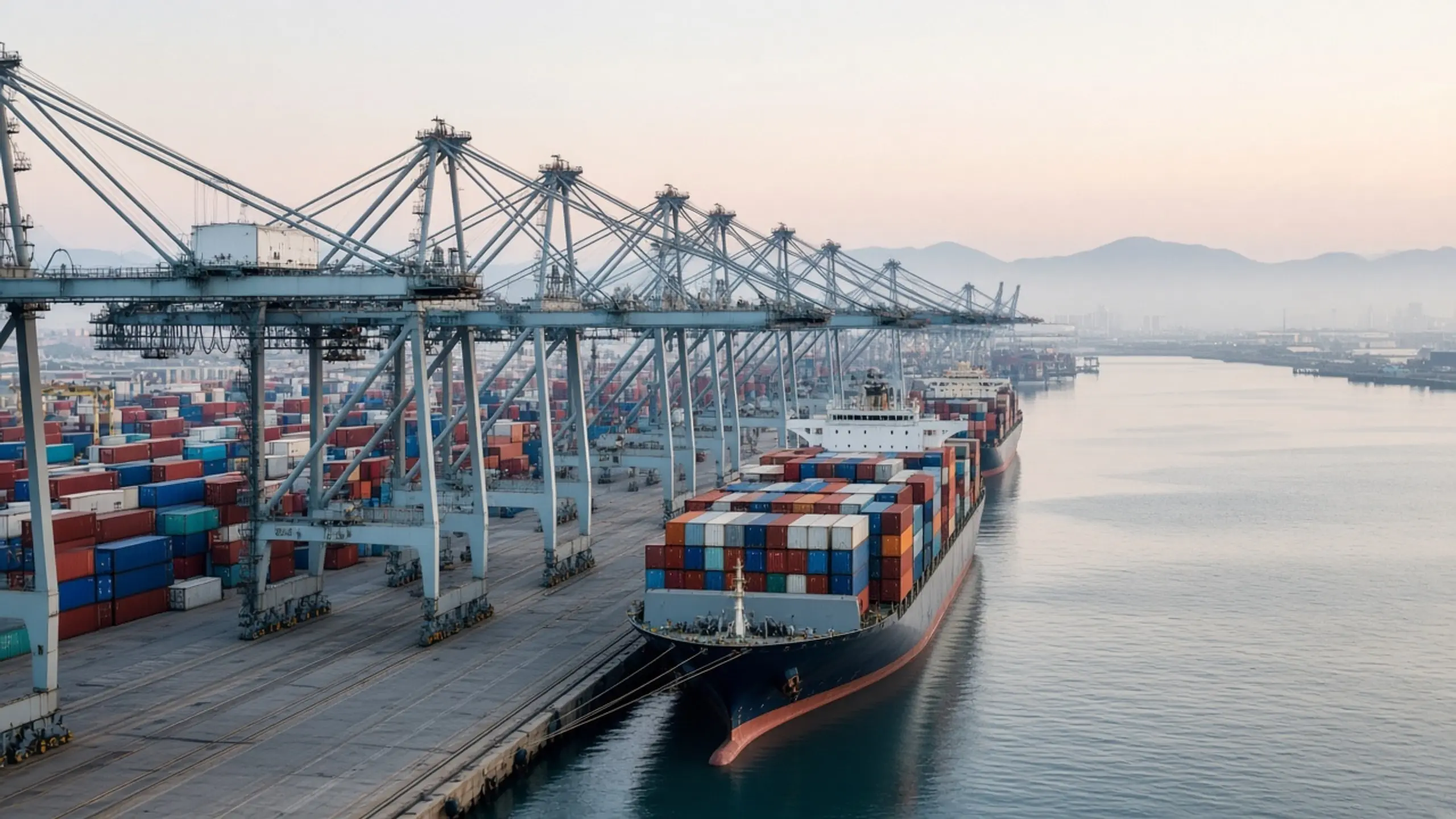
How this site uses China shipping ports
Cargo usually leaves from a coastal gateway or an inland city. The gateways named in the freight forwarding overview are Shanghai, Ningbo, Shenzhen, Guangzhou, Qingdao, Xiamen, and Tianjin. Yiwu is a frequent consolidation point. A quote still names a specific sailing, flight, or train, and it still depends on the commodity, the packing, and the carrier that has space.
People also search for a ports map, a sea-port list, and container terminals. This page is that list. It does not draw a live congestion map, and it does not publish a sailing schedule. A China shipping ports search often wants those tools; they are not on this site.
Where the harbors sit
The table is the China shipping ports list this site will stand behind. It uses public descriptions of where each harbor is, and it does not copy berth counts or container throughput. Those figures go out of date. A blank means the figure was left out on purpose.
Shenzhen is one gateway on the overview, with two harbors people name separately: Yantian, on the north bank of Dapeng Bay in the east of Shenzhen, and Shekou, on the Nantou Peninsula beside Shenzhen Bay. Guangzhou’s port area covers the upper reaches of the Pearl River estuary, and the public port list also names Nansha. Ningbo is described with Beilun and Zhenhai; Zhoushan is listed as its own port beside it. The combined name Ningbo-Zhoushan is how many shippers search. This page does not add a merger date or a combined volume.
Major Chinese sea gateways. Locations are from the sources under the table. This site’s own wording is in the last column.
| Port | Where it sits, from the cited source | How this site uses the name |
|---|---|---|
| Shanghai | Eastern China, at the mouth of the Changjiang (Yangtze). Terminals extend along that river and the Huangpu. | Named as a common coastal gateway. Not listed as an office. |
| Ningbo-Zhoushan | Ningbo, including Beilun and Zhenhai, on the Yangtze River Delta. Zhoushan is a separate listed port. | The overview says Ningbo. The longer name is the one shippers search. No combined volume is stated here. |
| Shenzhen, Yantian and Shekou | Yantian is on the north bank of Dapeng Bay, in the east of Shenzhen. Shekou is on the Nantou Peninsula, by Shenzhen Bay. | The overview says Shenzhen. Yantian and Shekou are the two harbors inside that name. Not a claim that every terminal is open every week. |
| Guangzhou, Nansha | The port area covers the upper reaches of the Pearl River estuary, northwest of Hong Kong. Nansha is named on the public port list. | The overview says Guangzhou. Nansha is the district name that list uses. Not a promise of a berth. |
| Qingdao | Listed as Qingdao (Huangdao), at 36°04′N 120°19′E. | Named as a common coastal gateway. |
| Tianjin | Tianjin Xingang, on the estuary of the Haihe, west of the Bohai Gulf. The same source calls it a hub port, 72 miles from Beijing. | Named as a common coastal gateway. The distance is the source’s figure, not a transit time. |
| Xiamen | On the east coast opposite Taiwan, about 260 nautical miles northeast of Hong Kong. | Named as a common coastal gateway. The distance is the source’s figure. |
| Dalian | Listed with port limits around 38°55′N 121°40′E. | A major harbor on the public list. It is not one of the common gateways named on the home page. A quote still depends on space. |
Sources for the locations
Only the place of each harbor is taken from these pages. Berth counts, capacity, and any ranking those pages also contain are not repeated here.
- China Maritime Safety Administration, port information (opens in a new tab) Shanghai, Ningbo (Beilun and Zhenhai), Qingdao, Tianjin Xingang, Xiamen, Guangzhou, and Dalian.
- Bao’an District, Shenzhen, main ports (opens in a new tab) Yantian on Dapeng Bay and Shekou on the Nantou Peninsula. Terminal counts on that page are not used here.
- ClassNK port directory, China (opens in a new tab) Lists Nansha, Shekou, Yantian, Ningbo, and Zhoushan as separate port names. No volumes.
Where to go next
Questions about these ports
Which China shipping ports does the site already name?
Shanghai, Ningbo, Shenzhen, Guangzhou, Qingdao, Xiamen, and Tianjin, with Yiwu as a frequent consolidation point. Dalian is a major harbor on the public list and is not in that sentence on the home page. Naming a port here does not open an office there.
Are China shipping ports the same as a list of offices?
No. The names describe lanes a file may use. They are not a list of offices, and they are not a promise that every postal code is served every week. The carrier that has space still decides the sailing.
Is there a China shipping ports map on this site?
The home page shows a stylized drawing of ocean routes between continents. It is not a chart of these Chinese harbors, and it is not a live position map. This page is the written list.
Which inland cities feed China–Europe rail?
Rail cargo is loaded at inland hubs such as Chongqing, Xi’an, Chengdu, Zhengzhou, and Yiwu, and handed over at terminals such as Duisburg, Hamburg, or Małaszewicze. The right hub is the one that can accept the cargo and the cutoff, not the one that looks closest on a map.
Do you publish congestion or a sailing schedule for these ports?
No. This site has no tracking tool and no vessel schedule. A quote names the sailing, flight, or train that was available when the quote was written, and the booking includes the cutoff at that gateway.
Can cargo be collected inland and still leave through one of these ports?
Yes, when the lane allows a truck. The useful facts are the city or port where a truck can collect, the place of delivery, the weight, and the volume. Yiwu is a frequent place to consolidate before the gateway. The truck is part of the quote only when it is actually arranged.
Name the gateway in a quote
Say which city or port a truck can collect from, and where the cargo must be delivered. The reply names a sailing, flight, or train. It does not book it.
Go to the quote form